Heating System Repair in Layton, UT
Sometimes the furnace itself is fine and the heating system around it is the problem. The unit fires, the blower runs — but one floor roasts while the other stays cold, the air at the registers feels weak, certain rooms never warm up, or the whole house is so dry your skin cracks by December. Heat has to travel: from the furnace, through the blower, into the ductwork, out the registers, and back again. A failure anywhere along that path shows up as a comfort problem in the rooms.
Your provider looks at the whole chain rather than just the box in the basement. Blower performance, filter and airflow, duct runs where they're accessible, dampers and registers, the thermostat's placement and readings, and the whole-home humidifier if you have one. System problems get misdiagnosed as furnace problems all the time — and the reverse. The inspection separates them before any repair is proposed.
If your complaint is about how the house feels rather than whether the furnace runs, say exactly that when you call. Uneven rooms, weak air, dry air, a thermostat that lies — those details tell your provider they're on a system call, not a no-heat call, and the visit gets planned accordingly.
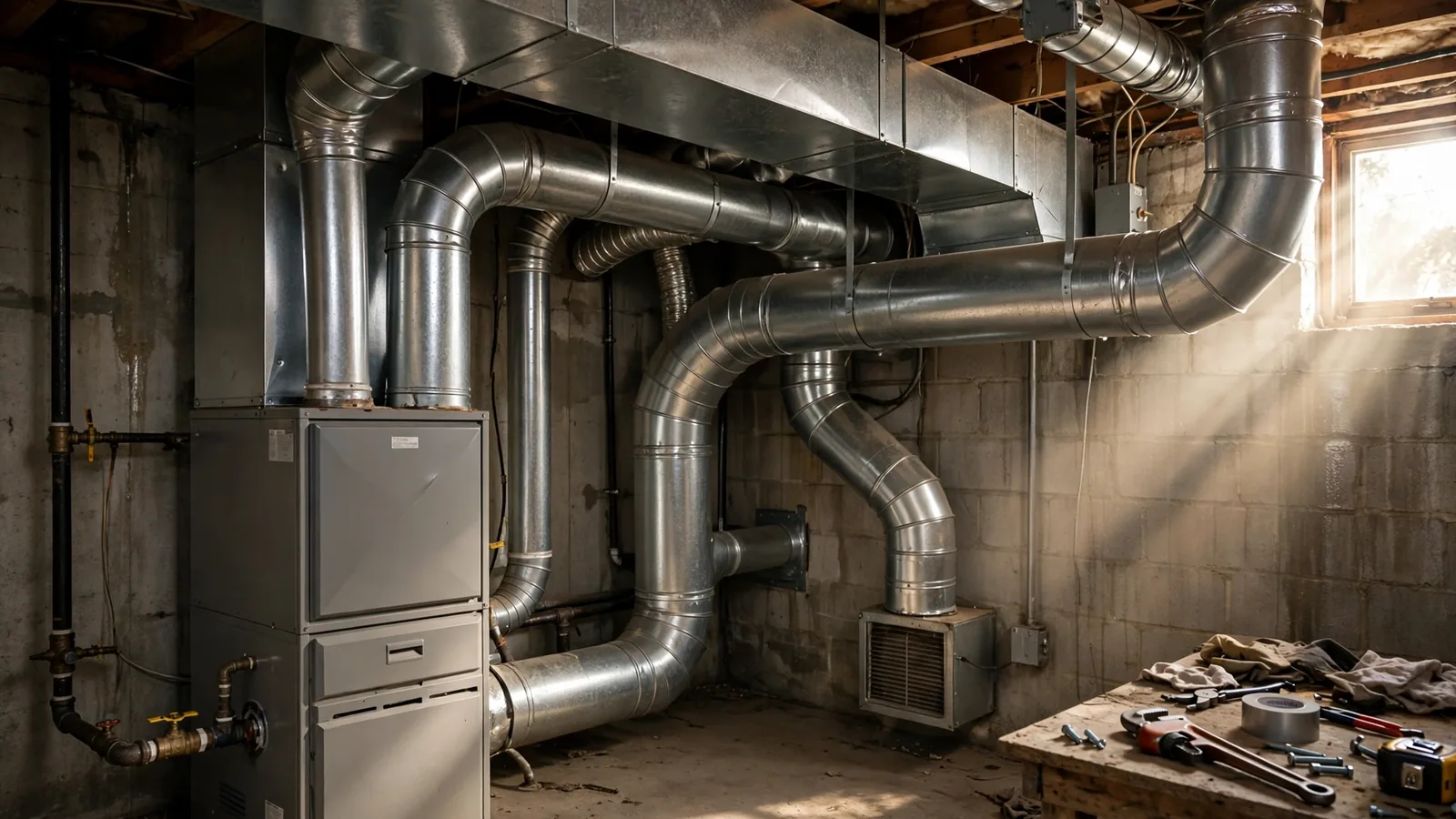
Signs the problem is the system, not just the furnace
- Weak airflow at the registers even while the furnace runs normally
- Big temperature differences between floors or between rooms
- One or two rooms that never seem to warm up at all
- Rattling, whistling, or booming sounds from the ductwork
- Painfully dry air all winter — static shocks, cracked skin, dry throats
- A thermostat reading that never matches how the rooms actually feel
How your provider handles system problems
1. Whole-system check
Your provider starts at the furnace and works outward: blower output, filter condition, duct runs where accessible, register flow room by room. The furnace gets verified too — system symptoms occasionally trace back to the unit after all.
2. Find the weak link
Airflow readings and inspection narrow it down: a weakening blower, crushed or leaking duct sections, closed or failed dampers, a thermostat in a bad spot, a humidifier that's scaled up and stopped working. You hear what's actually limiting the system.
3. Repair or adjustment
The fix matches the finding — blower repair, accessible duct sections sealed or repaired, damper and register adjustments, thermostat replacement or relocation, humidifier service. Your provider explains what each piece does for the rooms you actually live in.
4. Balance and verify
After the work, your provider re-checks flow at the registers and the temperature spread between floors. The proof of a system repair is in the rooms, not at the unit — and you should feel the difference described before the visit wraps up.
Heating systems in Layton homes
Layton's two-story homes with basement furnaces are system-repair regulars: heat rises, so top floors overheat while finished basements — often tapped into ductwork that was never sized for them — stay cold all winter. Long duct runs from a basement unit to second-floor registers lose heat along the way, especially where runs cross unheated garage ceilings. And the high-desert air makes whole-home humidifiers nearly standard equipment here; hard water scales them up within a few seasons, and a dead humidifier turns a heated home into a desert. Local pros know to check the dampers, the long runs, and the humidifier before blaming the furnace — because in Layton, it usually isn't the furnace.
Need heating system repair in Layton?
One call connects you with a local technician. No forms.
(555) 234-5678📞 Call Now